Tarmac surfacing
Tarmac surfacing that's dug, based and rolled properly
Hot-laid bitmac for driveways, forecourts, access roads and car parks. The surface is the cheap part — what's under it decides whether it's still flat in ten years.
- £45–£65
- Per m², supply and lay
- 3–4 days
- Typical driveway
- Same day
- Drive on it by the evening
- 10 years
- Workmanship guarantee
How it's laid
Hot, tight and level — the only way tarmac stays flat
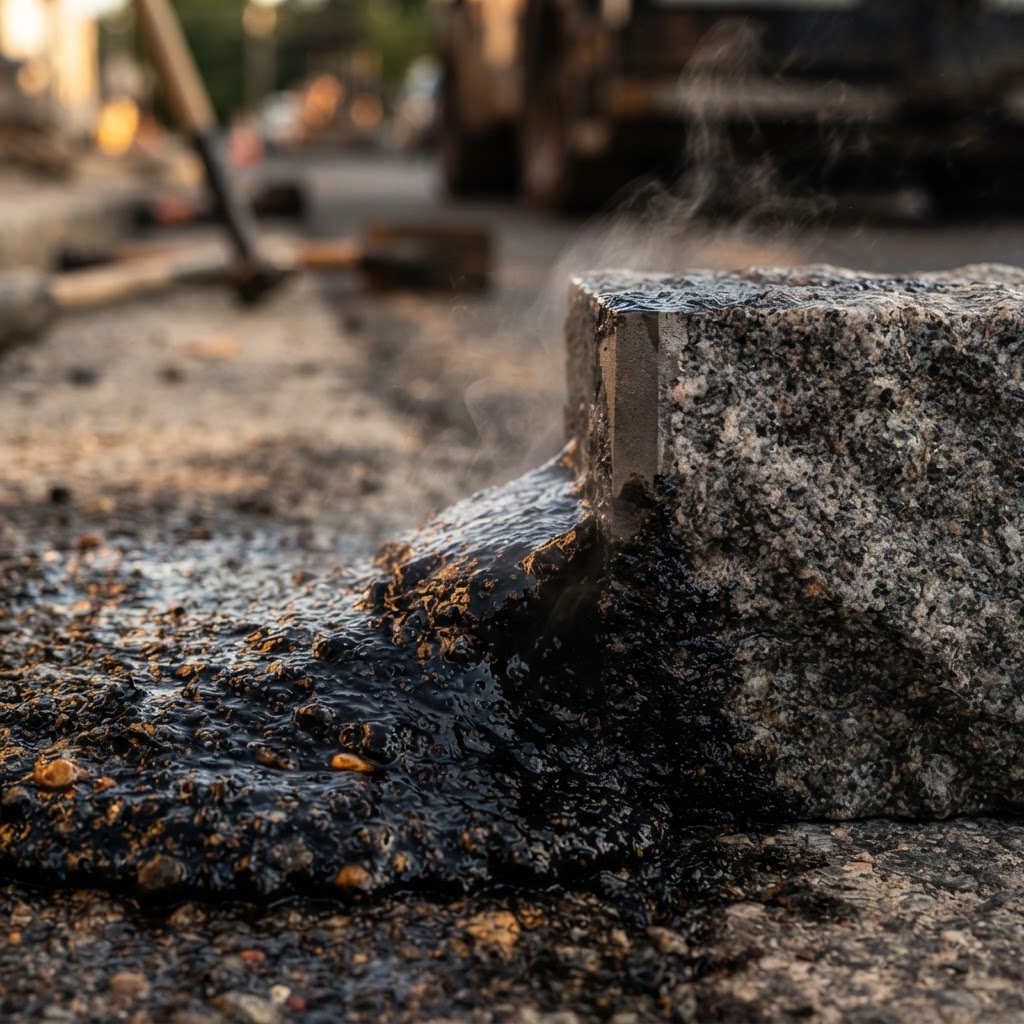
Tarmac fails for one of two reasons: it was laid cold, or it was laid over something soft. We dig out to a firm formation, compact the stone in layers, hold the edges on concrete and only then bring the blacktop in. It arrives hot, goes down the same day and gets rolled while it's still workable.
- Hot-mixed bitmac at around 150°C — never cold-lay on a driveway
- Sub-base compacted in layers, not one loose tip
- Edges bedded on concrete before the surface goes down
- Falls of at least 1:60 away from the building, tested with water
Where we lay it
Driveways, forecourts and everything between
Domestic driveways
Single and double drives, in-and-out turning areas, and dropped kerb crossings onto the highway.
Forecourts & yards
Hardstanding for workshops, yards and side access — laid heavier where loaded vans and trailers stand.
Access roads & tracks
Shared drives, farm tracks and site roads, with widened passing places and cambered falls.
Car parks & aprons
Marked bays, bay dividers and turning circles for small commercial car parks and loading aprons.
Resurfacing & overlays
Planing off and re-laying tired surfaces where the base underneath is still sound and the levels allow.
Patch repairs & potholes
Cut out, re-base and re-lay in hot material — a proper repair, not a bag of cold-lay on a wet morning.
The build-up
What's under the tarmac, layer by layer
These are the depths we hold ourselves to on a domestic driveway. Heavier use — vans, trailers, commercial yards — gets more stone, not less.
Excavation
200–300mm
Old surface lifted, spoil taken away, formation levelled and proof-rolled. Geotextile membrane over soft or clay ground so the stone can't sink into it.
Sub-base
100–150mm
Type 1 / MOT granular fill laid in two lifts and compacted with a vibrating roller until it rings solid — 100mm for foot traffic, 150mm where cars and vans park.
Binder course
50–60mm
20mm dense bitumen macadam, the load-spreading layer that takes the weight before it ever reaches the visible surface.
Surface course
25–30mm
10mm close-graded bitmac, delivered hot at around 150°C, laid by machine where access allows and rolled tight while it's still workable.
Edging & haunching
Set first
Granite, concrete or timber edging bedded on concrete before any blacktop goes down, so the edges can't spread or crumble under turning wheels.
Seal coat
Optional
Applied after six to twelve months to bind the surface, deepen the colour and slow weathering. It protects a good surface; it can't rescue a bad base.
Tarmac, bitmac, asphalt
Same material, three names
You'll hear all three on a quote. Here's what each one actually means, so nothing on the paperwork is a surprise.
Tarmac
What everyone calls it. A hot-mixed bitumen surface, laid and rolled on site.
Bitmac
The trade name for it — bituminous macadam. Same material, specified by the mix.
Asphalt
The industry-wide term for bitumen-bound mixes, from driveways to motorways.
The job, start to finish
Four days from dig to driveway
A typical two-car tarmac drive. Bigger areas, extra drainage or a dropped kerb add days — you'll know which before we start.
01
Measure & fix the price
We check levels, falls, drainage and access, then leave a written fixed price for the area, the depth of dig and the edging — not an estimate that moves.
02
Strip out & sub-base
Old surface up, spoil away, edges set out and the type 1 compacted in layers. This is the day that decides whether the tarmac lasts.
03
Lay & roll hot
Bitmac arrives hot and goes down the same day. Machine-laid where there's room, hand-laid and tamped in tight corners, then rolled until the joints close.
04
Finish, sweep, sign off
Edges dressed, site swept, drainage checked with water. Drive on it the same evening, and the workmanship is covered for ten years.
Instant estimate
What will your driveway cost?
Enter the area and pick a surface for a rough supply-and-lay figure. Most UK driveways fall between 30 and 60 square metres — roughly one car space per 15 square metres.
Surface
Your rough estimate
£2,250 – £3,250
50 m² of bitmac / tarmac · supply & lay
Cheapest per square metre, drive on it the same day.
- Includes excavation, sub-base, edging and drainage falls.
- Excludes dropped kerb licences, soakaways and extra drainage runs.
- Indicative only — the fixed price comes from a measured site visit.
Tarmac questions
The things people ask about tarmac
Anything not covered here, ring us — we'd rather answer it now than after the roller's left.
Free site visit
Get a fixed price, in writing, within 48 hours
We'll measure up, check the levels and drainage, and talk you through the right surface for your budget — no pressure and no obligation.